
|
|
|
|
|


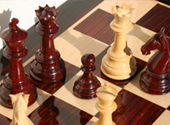
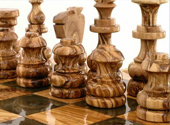
Who invented chessIf you love board games then you have most likely played chess at one point in your experience. Even if you aren’t much of a board game player, you are probably still somewhat familiar with chess as perhaps the oldest game still in existence. With such a long and colorful history, you may have wanted where the game came from. There are two schools of thought regarding who invented chess. While we may never the whole truth about each of these theories there is a credible amount of validity in each of them. There are some who argue that an early Chinese civilization created a game based on military strategy that was the precursor to chess. This game used large figurines atop a wooden board, similar to the setup used in chess of the modern Western world. These figurines, representing the army, also followed a strict set of rules that required them to move in specific patterns in order to protect the king. Records of this game, called xiangqi, date back to the fourth or fifth century. However, the more popular theory, supported by most scholars is that chess was indeed invented in India around the sixth century. Though the details surrounding the legend are not consistent among the different stories, the fact is that this theory suggests that the King of India had tired of the common games of the realm and time. Whether he commissioned someone to invent a game or someone did so voluntarily is not clear, but the next event is that a mathematician created a game called Chaturanga to sate the King’s request. The objective of Chaturanga was to maneuver one of two armies across a board of sixty-four squares in order to overtake the opposing king. Of course, this is precisely the goal of chess as we know it today. The King of India at the time loved this game so much that he offered the young inventor anything he desired and to his surprise the young man responded in a peculiar way. This is where the details get fuzzy again, but one theory is that he requested the King give him one grain of rice for the first square of the board and then double the amount for every other square. The King thought this was a menial request but when he tried to fill it, discovered that he did not have enough rice in his entire kingdom. |

|