
|
|
|
|
|


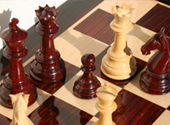
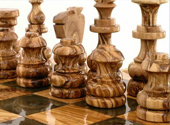
The whole wide world chessThe history of chess is long and colorful. Though the exact details of its origins are unclear, experts and historians seem to agree that our modern game of chess came out of an ancient East Indian board game called Chaturanga. Developed in the fourth century by a mathematician, Chaturanga was meant to be a military strategy tool, and legend says that the king was so appreciative that he offered to give the logical genius anything he desired in the land. The greatness of this legend is truly in the brilliance of the mathematician, as he requested one grain of rice for the first square on the board and then twice that on the second and twice that on the third. He ordered that the king continue in this manner until all of the 64 squares were accounted for with their respective grains of rice. The King was unsure of this, since he didn’t find value in tiny grains of rice, but he granted the young man’s wish and came to find that when he reached the final square, he did not have enough rice in the entire kingdom to fill it. All he could do at this point was laugh, and congratulate the man on a brilliant scheme. People all over the world have loved and appreciated chess for centuries. It is one of the oldest games still being played today and might be source of inspiration for a majority of board games being sold in retail stores. It not only survived the digital transition, but continues to dominate game sites and forums to this day. Variations like Battle Chess and Takeover Chess provide new, interesting, and exciting ways to play the game, and because it is so popular, you can find software that will let you play the ancient iterations as well. Collectors love chess memorabilia. Tournament sets are often also well-crafted pieces of art and are the basis for many other sets of collectible pieces. You can find Alice in Wonderland chess sets, Lego replica chess sets, the whole wide world chess sets, and anything else that might characterize pop culture icons throughout history. They can be made of the traditional rosewood or other lighter woods or even dye cast metal. Practice, student, and casual sets are much smaller and cheaper because they are made out of plastic which makes them great for transport and use in hobby halls or church activity centers. |

|