|
|
|
|
|
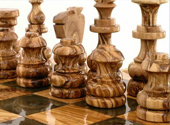
Rasskin Chess MetaphorsMost people probably think that the ancient, noble, humble game of chess is simply a military strategy game where you must overtake your opponent’s king in order to win. Diego Rasskin Chess Metaphors book discusses the other subtle aspects of the game that play into a deeper understanding of our human psyche. Notions of honesty, deceit, fear, aggression, creativity, bravery, and beauty are all things we subconsciously deal with during just one single game of chess. We encounter these attitudes, emotions, and thought processes every day, and probably do not even realize the affect they have on our diurnal dealings. Rasskin makes a valid and interesting attempt at exploring how the simple game of chess is actually a deep, introspective study into the way our minds work, both individually as singly cognizant beings and collectively as an entire species of animal. According to Rasskin, performing the activity of chess, as in playing the game, uses most or all of our cognitive faculties, something that is rarely seen in any other single activity we engage in. This makes studying the strategies and methodologies of chess ideal for laboratory study. In these studies, so much more information and analysis can be formed about the inner workings of the human mind. Focusing on the simple, cognitive task of problem solving, which is truly the most basic function of chess, Rasskin’s book examines this singularly elementary faculty from both the biological perspective as well through the lens of Artificial Intelligence. Expanding the fundamental principles of problem solving through the game of chess and out across the framework of our lives, he evaluates the influences that touch on the edge of games, art, and science as well. Ultimately, Diego Rasskin Chess Metaphors explores the capacity of Artificial Intelligence within the confines of a standard sixty-four square chess board. Within this limited scope, he investigates the process of developing AI which could defeat a human Grand Master, resulting in the first virtual world champion. Of course, he discusses how these results never pan out because no computer could ever match the fundamentals of consciousness, thought, emotion, memory, and several other cognition-based human procedures. Through the strategic move sets of the boards’ thirty-two pieces, Rasskin attempts to map out the intricacies of the human brain, from structural to functional organization, all the way to the fundamentally creative nature of the human brain that makes the human animal such a remarkable creature. |

|